





LURU × DON'T BE CONTENT · FOR VIJAYALAKSHMI SILKSLURU × DBC · VS 105
× Vijayalakshmi Silks
Proposal — v3
A LURU Magazine × Don't Be Content Proposal

A Hundred & Five Years,
Six Yards at a Time

Vijayalakshmi Silks turns 105, crowned by the Royal Edit — 105 sarees revived with the Royal Family of Mysore. This book gathers the century behind them: the family, the counters, the looms, and the women who carry the silk forward.

A hardbound book in two editions — 105 numbered heirloom copies in a saree box with woven swatches bound in, and a trade edition — launching ahead of the November wedding season, 2026.

working title — the real one will reveal itself in the interviews, as it always does

Prepared by LURU Magazine With Don't Be Content For Dhiren C Ashok · Vijayalakshmi Silks 12 June 2026
Scroll ↓ · The loom above is listening to your cursor
00

What We Heard on the 29th of May

Nikhil met Dhiren, Akash, and Pooja on 29 May. Every decision in this document traces back to that conversation.

We heardWe built
Vijayalakshmi Silks should be seen as "a living institution" — aspirational across India, relevant to older and younger customers alike. A book where the saree itself carries the story — drape, purchase, inheritance, loom — with the house at the centre of all of it. §02
The Return on Objective: "heirloom quality to it — siblings to fight over it." 105 numbered copies in a saree box, archival materials, swatches bound in — built for a 50-year life. §03
Expansion into new markets is coming — cities with their own century-old silk houses. The book positioned as the house's cultural calling card: proof of provenance that travels ahead of the stores. §01
Boundaries are set, flexible at the edges. Sneaker-and-skateboard shoots are out. Youth relevance through true stories told beautifully — the salesman's craft, the bride at the counter, the WhatsApp saree trade. §02
October–January is the selling season; Chennai and Delhi warm up first. Launch in the first half of November 2026, riding the season. §05
The 105th year is fully documented — the Royal Edit page, the film, the reels, the press wall. Phase 0 collects and organises all of it into one tagged archive within a fortnight. §05

01

Why This Book, Why Now

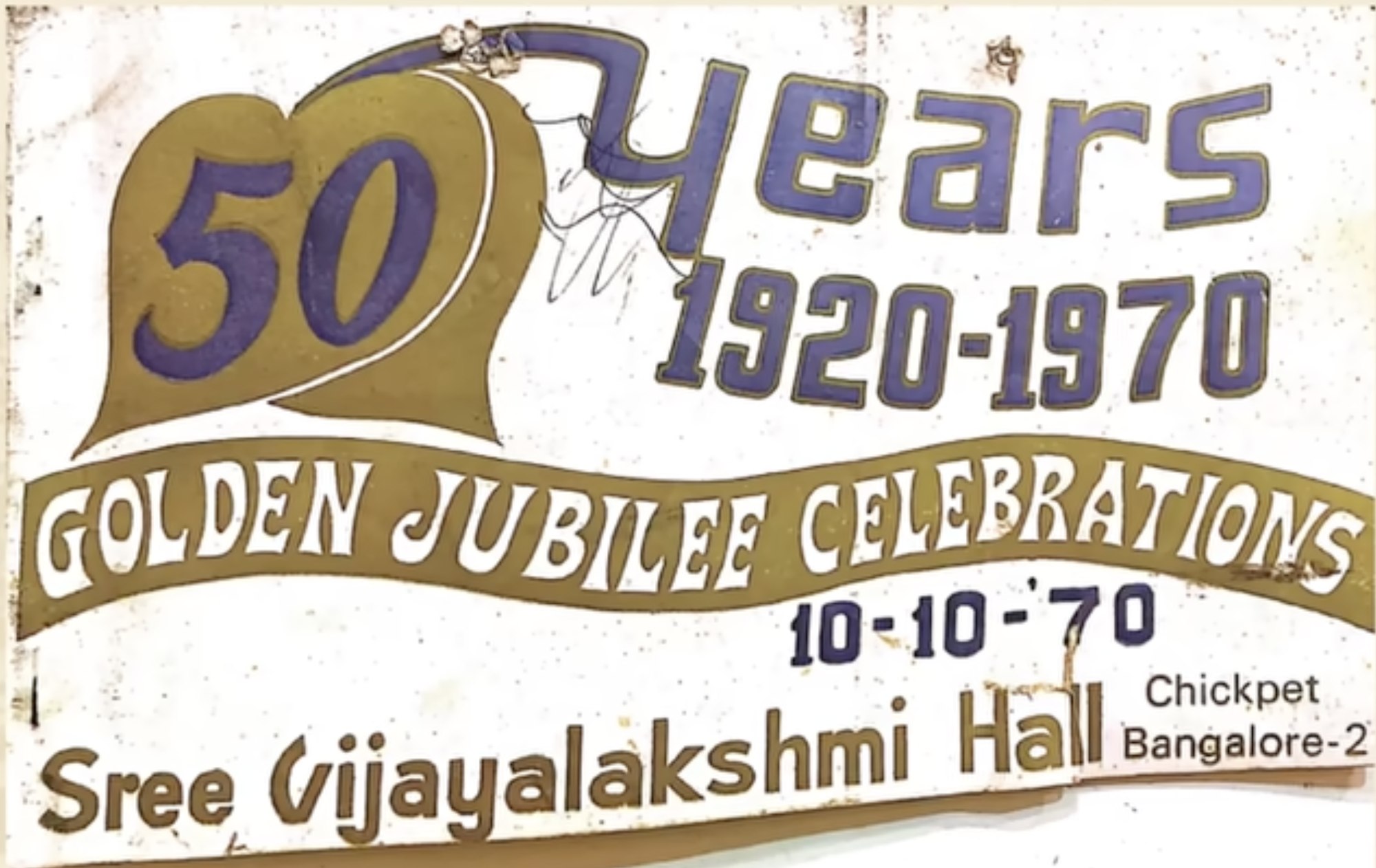
It began with a name, pressed in red dye on raw silk. In 1920, Devatha Adappa Venkata Ratnam Setty and his nephew C. S. Venkataram opened Sree Vijayalakshmi Hall in Chickpet, Bengaluru. Stock came from the weaving towns by rail and took weeks; the founders hired trunks, locked the silk inside, and slept on them through the train journeys to keep it safe. By mid-century — backed by figures like Tubugere Nanjappa and the State Bank of Mysore — the hall had grown into a modern showroom, and the second generation under C. V. Ashok Kumar carried the house to M.G. Road, the city's first silk saree showroom, then on to K.G. Road. Four generations on, the family still recites the founding principles: good quality, fair price, honest texture.

Golden Jubilee 1920–1970 artwork, Sree Vijayalakshmi Hall, Chickpet
Golden Jubilee, 10 October 1970 · Sree Vijayalakshmi Hall, Chickpet · from the family archive

The house and the throne share a craft. The Wadiyars built modern Mysore silk: Tipu Sultan seeded sericulture at Channapatna in the 1780s, the Tata Silk Farm of 1896 brought Japanese rearing methods into the state at the Mysore Durbar's invitation, and Nalvadi Krishnaraja Wadiyar founded the Mysore Silk Weaving Factory in 1912. In 2025, the two histories formally met: for its 105th year, Vijayalakshmi Silks created 105 sarees with the Royal Family of Mysore — lost iconic designs revived beside patterns in continuous production, carrying the Ganda Berunda crest and the Annapakshi, with Princess Darshika Kumari designing the crest herself. The press wall ran from The Hindu to Robb Report. One saree in the collection says everything about how this house works: a customer brought in her sixty-year-old trousseau saree, faded and distressed; the house traced the original weaver family, found a grandson who remembered the commission, and recreated it over five months.

The Ganda Berunda — a mythological two-headed bird, powerful and sacred to our lineage. Vishnu himself is said to have blessed our ancestors with this emblem. We've carried it with pride, for protection and strength, for our legacy. The Royal Family of Mysuru · from the 105th-year film

Now the timing. The house is preparing to enter new markets — cities where silk houses with their own century-old heritages hold the cultural ground. A definitive, awarded book travels ahead of the stores: proof of provenance before the first ribbon is cut. The 105th year set this up. The book completes it.

The people who hold the memory are available now: the 85-year-old aunt with her wedding saree, the 40-year veterans of the shop floor, the master weavers, the customer who came to April's Loom, Legacy & Landmark retrospective at Sabha to say her saree was still intact. Oral history has a closing window.

0years · and 105 heirloom sarees revived
0stores · plus a museum & teaching institute
0years of service · still on the shop floor
0generations buying under one roof

One name, a century of marks

From the 105th-year film: the logo as it changed hands and decades. The book gives each mark its chapter of the family story.

Vijayalakshmi Silks logo, early mark Vijayalakshmi Silk Enterprises logo Vijayalakshmi Silks & Sarees paisley logo Vijayalakshmi Silk Masters since 1920 badge logo Vijayalakshmi Expressions Saris logo Vijayalakshmi purple script logo Vijayalakshmi white script on purple paisley block
The marks of Vijayalakshmi · 1920 → today
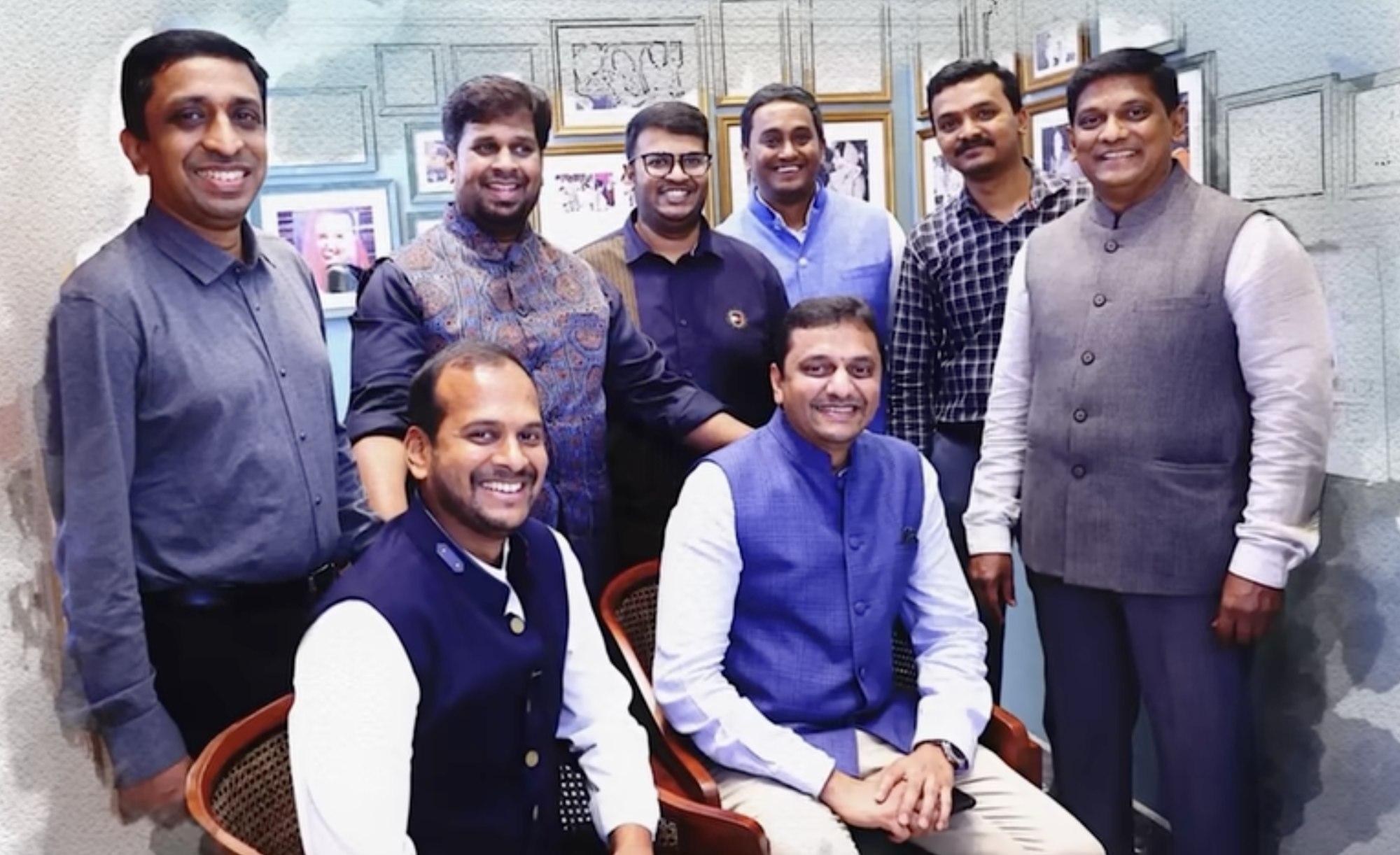
The fourth generation, from the 105th-year film
The fourth generation · from the 105th-year film
The Royal Mysore Edit — 105 years of royal heritage
The Royal Mysore Edit · 105 years of royal heritage · vijayalakshmisilks.com
02

The Story We Want to Tell

The saree is six yards of unstitched cloth and a body of inherited skill. The tying of it passes hand-over-hand from mother to daughter until it lives in the wrists and fingers — what anthropologists call a technique of the body. A woman ties it one way to cook, another way to work, another for a wedding. The drape is muscle memory. The muscle memory is ritual. The ritual is inheritance.

The book holds one central tension: everyday saree-wearing is becoming occasion-wearing. Younger women drape it for weddings and festivals; their grandmothers draped it every morning. Each surviving ritual — the bridal purchase, the mother teaching the pleats, the trousseau handed down — now carries more weight, and the knowledge behind it sits with fewer people. Recording what is alive, while it is alive, is the book's job. It is also the house's strongest claim to cultural authority in every city it enters.

Rohith C Ramesh said it precisely at April's exhibition: every saree carries two parallel lineages — the craft lineage of the loom, and the social lineage of the store. The book is built along those lineages. Eight threads follow the saree itself: from the loom, through the province that perfected it, across the counter, onto the body, down the generations — home to the house that has stood in the middle since 1920.

Thread 01 · The Loom
The Weave & the Trade

The weaver families — multi-generational players, in Dhiren's phrase — and the working truths of the trade: quality control and the frictions of weave, saree photographs flying between dealers on WhatsApp, devices in every store since Covid, what sells at ₹5–6k online and what sells only in person.

Thread 02 · The Province
The Science & the State

Why Mysore means silk: Tipu Sultan's sericulture at Channapatna in the 1780s, the Tata Silk Farm of 1896 bringing Japanese rearing methods at the Durbar's invitation, the Maharaja's weaving factory of 1912. The chemistry of mulberry silk and zari — why the fabric falls, shines, and lasts the way it does.

Thread 03 · The Counter
The Sellers

Forty years at one counter is a doctorate in human nature. How the house's salespeople hold a room, read a family across the table, and sense taste shifting seasons before any trend report. Their stories fill an archive that has waited decades for a listener.

Thread 04 · The Occasion
The Purchase

The shop floor at full tilt. Wedding parties arrive as whole families; the bride often meets her in-laws properly for the first time over silk; thirty sarees unfurl so the thirty-first can be chosen. Bridal buying remains a family event, in person — this chapter shows why.

Thread 05 · The Body
The Drape

How women learn to tie a saree — the mother's hands over the daughter's, pleats counted by feel, a different tie for cooking, fieldwork, a wedding. The chapter records the drapes of the house's own customers, three generations deep, while every one of them can still demonstrate.

Thread 06 · The Line
The Inheritance

Sarees as stridhan — a woman's own wealth, moving mother to daughter, outside the ledgers men keep. The wedding saree kept forty years and brought back to the store, intact, as testimony. The sixty-year-old trousseau recreated over five months. Siblings fight over sarees; this chapter explains why they will fight over this book.

Thread 07 · The House
The Family

1920 to 2025: Venkata Ratnam Setty's red-dye signature, the trunk journeys, M.G. Road's first showroom, seven stores, the museum and teaching institute, the family tree across four generations — and the Royal Edit as the latest chapter in a century-long conversation between the house and the throne's silk.

Thread 08 · The Future
2040, Looking Back

The frame that opens and closes the book. In 2040, a granddaughter lifts a saree box down from a shelf. Inside: a saree, and this book. The meeting asked us to make the future tangible — the reader meets everything in the book as she finds it.

The scholarly footing

The book stands on real literature — Mauss's Techniques of the Body (1934), Banerjee & Miller's The Sari (Berg, 2003), the documented history of Mysore sericulture — and every historical claim gets fact-checked against primary sources before print.

A note on editorial honesty

The frictions of weave appear beside the improved QC; the changing market beside the unchanging ritual. Honesty is what makes the praise believable — and what earns the book its place in the wider cultural conversation.
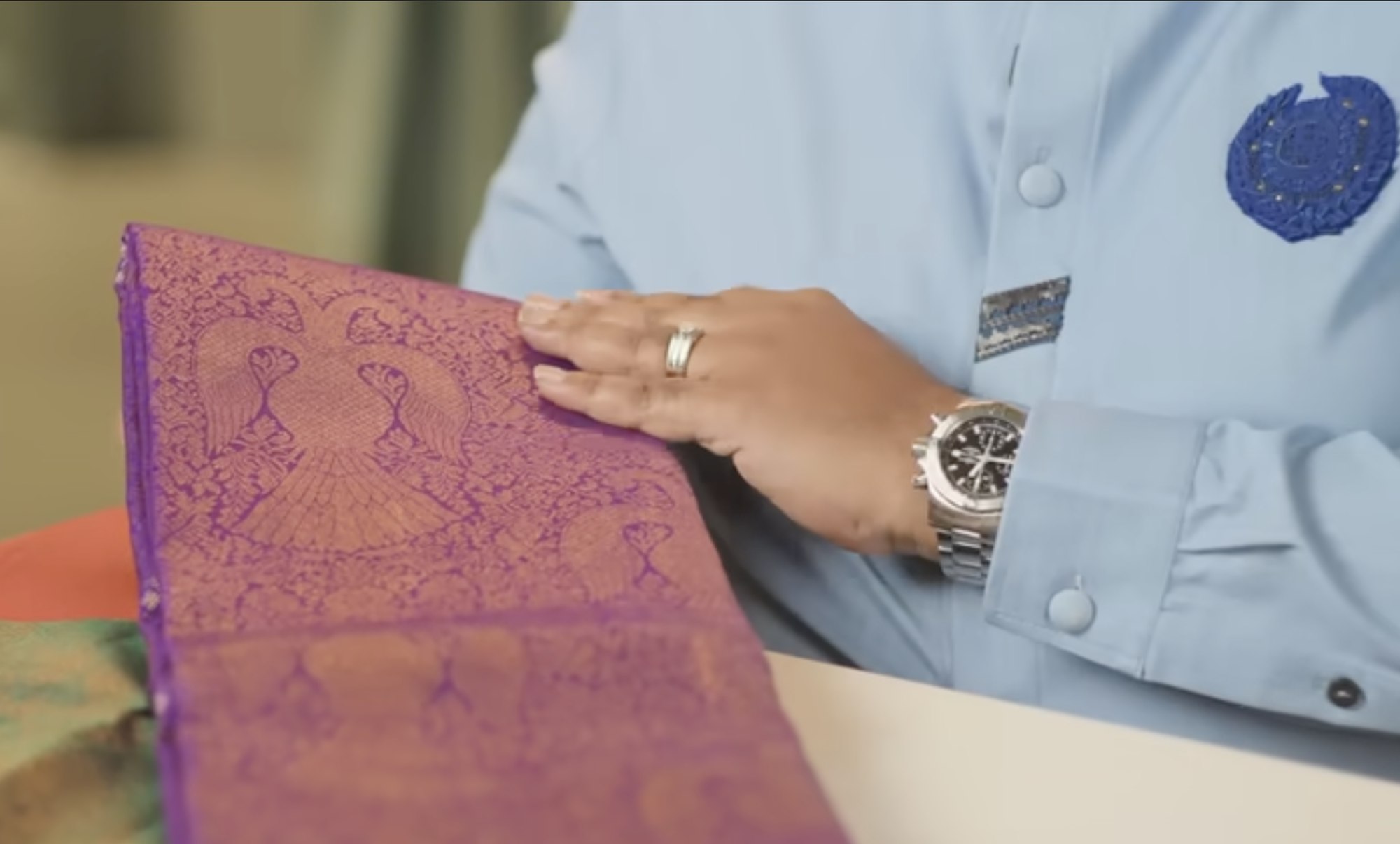
Hands on silk with zari border, from the 105th-year film
From the 105th-year film · the fabric, read by hand
03

The Object Itself

The brief was exact: heirloom quality, safe in a family's keeping for fifty years, siblings fighting over it. So the book behaves like the thing it honours — heritage, legacy, and living culture, in cloth and paper.

Edition One · 105 copies

The Saree Box Edition

  • 105 numbered copies — one for each saree of the Royal Edit — hand-numbered 001/105 to 105/105
  • A saree box: cloth-covered clamshell, built like the boxes the house's finest silks leave the store in
  • Woven silk swatches tipped onto archival pages — the reader touches the subject
  • Embossed and foiled case, sewn binding, archival paper, specified for a 50-year life
  • A keepsake certificate, with space for the owning family to record its own line of inheritance
Wedding-album logic: limited circulation, fiercely kept. The house gifts, allocates, or sells them to the families closest to it.
Edition Two · Open run

The Trade Edition

  • The same book, beautifully made at a humane price — hardbound, full colour, sewn
  • For store counters, gifting, bookshops in Bangalore, Chennai, and Hyderabad, and younger readers discovering the house
  • A deliberately small run — indicatively 200–400 copies, sized with the house closer to launch
  • This edition travels: it does the aspirational work in every new market
The 105 make it precious. The trade edition makes it present. The meeting asked for both kinds of power.

A third life for the story — a digital telling, built for maximum reach — is worth discussing at a later stage, once the book exists and has earned its audience.

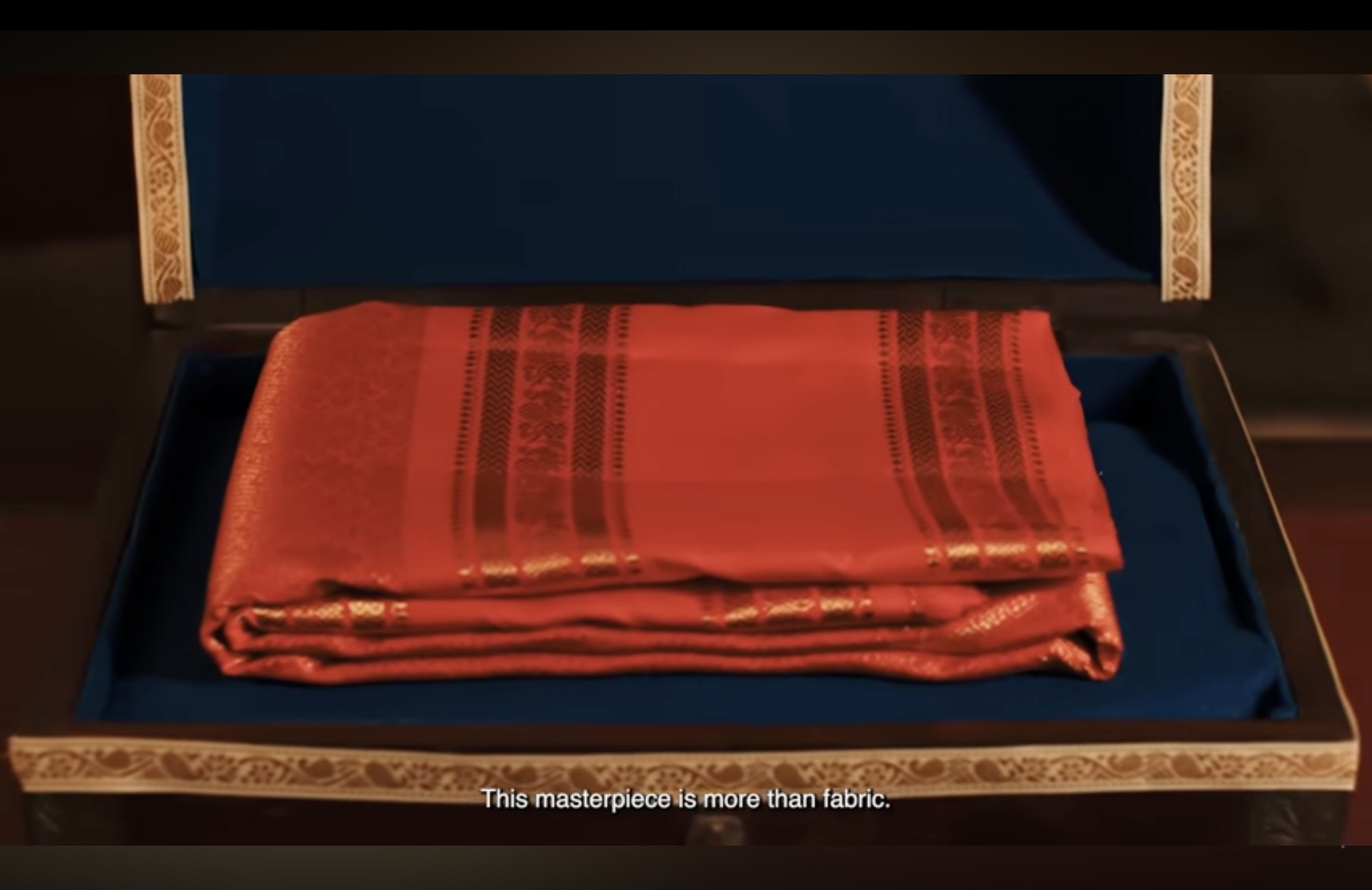
A saree resting in a wooden trunk, from the 105th-year film
From the 105th-year film · the trousseau saree in its trunk — the object the book is built to sit beside

How the form works

Six design behaviours, each borrowed from the garment's own engineering.

01
The Pallu Principle

Each chapter closes the way a saree closes — in a dense, image-rich final spread. The decoration intensifies at the end-piece.

02
Warp-and-Weft Family Tree

One textile diagram: the family as vertical warp, the weavers, sellers, and city woven through as weft.

03
Pleated Gatefolds

The 105 collection and the history wall unfold in accordion pleats, the way a drape opens.

04
Selvedge Edges

Chapter openers carry a printed selvedge — the self-finished edge of woven cloth — as the book's running navigation.

05
Thread Markers

Two ribbons, zari gold and arakku maroon. A book consulted for decades holds its reader's place.

06
The Swatch Pages

In the Saree Box edition, tipped-in silk swatches with provenance captions: weave, weight, loom, hands.

Books that set the bar

Rta Kapur Chishti's Saris of India (Roli Books) — twenty years of research, 108 drapes documented step by step. The Fabric of India (V&A Publishing, 2015) — the museum standard for photographing Indian textiles. Banerjee & Miller's The Sari (Berg, 2003) — the ethnography of living in the garment. Our full visual-reference deck lands in the first design sprint.

04

What Success Looks Like

The return on objective

A living institution, holding its first great document.

The heritage expectation, met. Aspiration earned across Bangalore, Chennai, Hyderabad, and every market the house enters next. Deeper immersion for the customers who already love the house, and a real reason for their daughters to be interested. The hard metric is the soft one: in forty years, this book is still on a shelf, still argued over in a will, still shown to a grandchild.

One phrase from the meeting deserves to be the bar: "keepers of culture." Monocle made its readers feel like citizens of a tasteful world. This book makes its readers custodians of a living one.


05

Process & Timeline — November 2026

Let us be plain: June to November is an unreasonable timeline for a book of this ambition. Publishers routinely take eighteen months; we are taking twenty-one weeks. We are doing it because the occasion justifies it — the 105th year is still warm, the Royal Edit is still in the press, and the November–January season is when this book does its best work for the house. Chennai and Delhi warm up through October; the book launches in the first half of November 2026, exactly when the house's most engaged customers walk through the doors.

Phase 0 · Weeks 1–2
Archive Assembly

We collect everything that exists — the Royal Edit page, all 105 saree records, the film and reels with captions transcribed, the press coverage, the history wall, the family's photographs — into one tagged archive. It powers the book and stays with the house permanently.

Phase 1 · Weeks 2–7
The Listening — Oral Histories

25–30 recorded interviews: the family across generations, the 40-year salespeople, master weavers, three-generation customer families, Sabha attendees. Conducted in Kannada, Tamil, Hindi, and English; transcribed and translated. The story architecture — the book's editorial blueprint — lands at week 7.

Phase 2 · Weeks 6–13
Writing & Photography

The eight threads written (~50,000 words) while commissioned photography happens around them — stores at festival pitch, looms, hands, counters. Historical research and fact-checking run alongside. Biweekly sprint reviews keep Dhiren, Akash, and Pooja ahead of every draft.

Phase 3 · Weeks 11–17
Design, the Box & the Dummy

Art direction, layout (~200 pages), the family-tree diagram, gatefold engineering, saree box and swatch prototyping with Vishwakala Printers (Anil) — and a full physical dummy in the family's hands by mid-September.

Phase 4 · Weeks 17–21
Final Edit, Print & QC

Copyedit, proofs, press passes at Vishwakala. The Sabha lesson applied where it matters most: every one of the 105 boxes, swatches, and numbers checked by hand before leaving the printer.

November 2026
Launch — Into the Season

Bangalore launch in the first half of November; the book rides the Chennai and Delhi warm-ups and the November–January arc. Launch film and store collateral ready two weeks prior.

The honest note on this timeline

Twenty-one weeks works because the 105th year is already documented and every interviewee is reachable through the house — it requires material in the first fortnight, one-week review turnarounds, and swatch fabric by September. If a gate slips, the 105 boxes still launch in November and the trade edition follows in January, mid-season.

The Vijayalakshmi Silks history wall — a century of timeless elegance
The history wall · a century of timeless elegance · raw material for the family-tree chapter
06

What We Need from the House

Material & access request — at kickoff

The Royal Edit archive — working files behind the campaign: photography, the film and reels, captions, the press kit, the history wall artwork, the family tree, and the collaboration records with the Royal Family.

The family's own material — photographs, documents, ledgers, store interiors across the decades, the museum and teaching institute collection.

People — introductions to the 40-year salespeople, master weaver families, three-generation customer families, Sabha attendees, and Anand's aunt. Plus a path to the Royal Family's office for the chapters that touch the collaboration.

Brand guardrails — the brand guidelines, and one conversation about where the edges flex.

Fabric — swatch material for the Saree Box edition, committed by September.

A decision-maker cadence — biweekly 45-minute sprint reviews with Dhiren (or a named delegate), Akash, and Pooja; one-week turnarounds at the three approval gates.


07

The Fee — ₹32,00,000, Itemised End to End

One number, fully loaded: ₹32 lakh plus GST for everything from the first interview to the final press pass — research, writing, photography, design, the box, production supervision, and launch assets. Printing is payable at cost by the house directly to the printer, with our supervision included in the fee.

Why this number

Every line below is severable: it can sit with LURU, with Don't Be Content, or in-house with Vijayalakshmi Silks, and move without re-negotiating the whole.

Line itemWhat it coversFee (₹)
A · Research, Archive & Oral History5,00,000
Archive assemblyCollection and organisation of the Royal Edit documentation — film, reels, captions, press, history wall — into one tagged archive.50,000
Oral histories25–30 recorded interviews: family, salespeople, weavers, customers across three generations.2,25,000
Transcription & translationKannada, Tamil, Hindi → English; verbatim transcripts, thematically coded.75,000
Historical research & fact-checkingMysore silk history against primary sources; every date and claim verified before print.1,00,000
Story architectureThe editorial blueprint — eight threads mapped to material; the first approval gate, week 7.50,000
B · Writing, Creative Direction & Editorial9,00,000
Concept development & creative directionThe book's vision held consistent across all contributors, start to finish.2,00,000
Commissioned writing (~50,000 words)~200 pages of finished prose; commissioned writers at our standard ₹8/word rate.4,00,000
Editorial leadershipStructural editing, tone, narrative balance across the eight threads.1,60,000
Developmental edit & fact-check passStory arcs strengthened; every checkable claim checked.50,000
Copyediting & proofreadingFinal polish; consistency across voices and languages.90,000
C · Photography & Visual Material5,50,000
Commissioned photography10–12 shoot days: stores, looms, the drape, the counter, the family. Photographers + direction.3,00,000
Archival restorationScanning, repair and colour-correction of family and store archives.1,25,000
Image processing for printRetouching, calibration, pre-press colour management — silk is notoriously hard to print honestly.1,25,000
D · Design & the Object8,50,000
Conceptual design & art directionVisual identity, typographic system, the image–text balance of the whole book.2,25,000
Layout (~200 pages)Image-rich spreads including gatefolds and pallu sections.2,75,000
Commissioned illustration, maps & family treeThe warp-and-weft tree, chapter motifs, province maps — commissioned illustrators under LURU direction.1,25,000
Cover, case & saree box designEmboss/foil systems, the clamshell box, the swatch-page system — engineered with the printer.1,75,000
Pre-press & dummy supervisionFinal print files; the physical dummy produced and corrected.50,000
E · Production Supervision & Project Management2,00,000
Coordination & schedulingDay-to-day management of all contributors, the sprint cadence, the approval gates.1,15,000
Print supervision at VishwakalaOn-press passes with Anil's team; hand-QC protocol for all 105 boxes.50,000
Legal, contracts & complianceInterview consents, image rights, GST and contract administration.35,000
F · Launch & Film2,00,000
Launch film (2–3 minutes)Cut from the interview and shoot material — the book's trailer, made for the stores and for WhatsApp.1,15,000
Launch & store collateralSocial toolkit, in-store presence, event design support for the November launch and the warm-ups.85,000
Total — all services, end to end₹32,00,000

All figures exclude GST at 18%. Out-of-town travel for shoots and interviews beyond Bangalore–Mysuru billed at cost with prior approval.

Printing — at cost, excluded above

The house pays Vishwakala Printers directly at cost; our supervision is already in the fee. Indicative, to be quoted precisely off the dummy: the Saree Box edition (105 copies) — cloth clamshell, foil and emboss, tipped-in swatches, hand numbering — typically lands between ₹9,000–14,000 per copy (₹9.5–15L total); the trade edition at 1,000–2,000 hardbound copies between ₹700–950 per copy. Paper and board prices are moving — LURU's own latest edition took a 15–20% print-cost hit against earlier quotes. Final pricing locks at dummy approval.

Payment milestones

Four equal tranches of ₹8,00,000: on signing · on story-architecture approval (week 7) · on dummy approval (mid-September) · on delivery to launch. Each gate ties to something the house can hold in its hands.


08

Ownership & Editorial Terms

Draft for discussion

Intellectual property. All IP produced — the book, its design, the commissioned photography, the tagged archive, and the oral-history recordings — belongs to Vijayalakshmi Silks. This is a fees-for-services engagement; everything we make, the house keeps. The archive alone becomes a permanent asset of the house and its museum.

Editorial voice. The house came to LURU for our voice — that is the reason this conversation exists — and the book needs that voice to have soul. We ask for the editorial freedom to write with it. Don't Be Content sits front and centre with Vijayalakshmi Silks in guiding the work: the brand guardrails, the approval gates, the biweekly reviews are theirs to steer. And we hold a 105-year-old legacy in our hands; we will treat it with the respect a century has earned, and bring it to the forefront of every chapter.

Credit. Produced by LURU Magazine with Don't Be Content, for Vijayalakshmi Silks. Final credit language agreed together before print.

A draft to be refined together and formalised in the engagement letter.


09

Why LURU

LURU Magazine launched in 2025. Within its first year of publication and operation, Issue 03 — The Games We Play — won the 2025 Foreword INDIES award (Silver, Anthologies), a recognition that rarely reaches a first-year publisher, and the magazine won the Kyoorius Blue Elephant for design. Four issues so far, roughly 3,000 copies in circulation, a mailing list with a 60% open rate, and a readership that shares what it loves. A small team of writers, designers, and behavioural scientists in Bengaluru, making printed objects to the standard we want to hold in our own hands — the only standard that matters for an heirloom.

We are also deep inside a project that rhymes with this one: Grandmothers of India — 36 matriarchal oral histories recorded by grandsons and granddaughters, spanning decades of photographs, clippings, and first-person memory. It taught us how to turn multi-generational testimony into something a reader moves through with clarity and feeling. The saree book sits on the same shelf, methodologically and emotionally.

Cities need people to love them before they'll work to change them. The first step is telling the stories that make the city worth loving. LURU Magazine editorial philosophy

10

The Risks

Every proposal should argue against itself once. Five risks, five guardrails:

The counterfactual check

The brand-book trap. 200 pages of self-praise dies on a coffee table. Guardrail: the saree carries the story; the editorial terms in §08 protect the voice.

The timeline. Twenty-one weeks is unforgiving. Guardrail: three non-negotiables in §05, and the November/January fallback agreed now.

Festive-quarter access. The best interview subjects are busiest when we need them. Guardrail: all oral history front-loaded into weeks 2–7.

Approval layers. The Royal Family association may require sign-offs beyond the house. Guardrail: those chapters drafted and routed first.

Print volatility. Paper prices are moving. Guardrail: at-cost transparency with Vishwakala; quotes lock at dummy approval; the design degrades gracefully.


11

Next Steps

Step 1 · This week
An alignment call — LURU × Don't Be Content

Akash, Pooja, Nikhil — 45 minutes. Confirm the editorial direction (§02), the two editions (§03), and the November date. Decide which budget lines sit where before the proposal goes to the house.

Step 2 · Within a week of the call
Engagement letter

Deliverables, timeline, milestones, and the terms from §08 — kept simple, signed fast. Every week before July matters to the November date.

Step 3 · Immediately after
Material transfer & kickoff

The archive starts moving; the first interviews go on the calendar. Two weeks later, the house sees the tagged archive and the first thematic map.

We will say plainly what we said in the room: this is the most LURU-shaped project we have ever been offered. A hundred and five years, a royal collaboration, three generations of customers, forty-year salesmen, and a garment that carries the memory of South India in its pleats. We would be proud to make this book — and prouder still, in 2066, to hear that two siblings somewhere are fighting over a copy.